TECHNICAL ARTICLE:
| Innovative Equipment and Processes for the Electric Cable and Steel Wire Rope Industries |
||||||||||||
| By: SKET Verseilmaschinenbau GmbH, Germany | ||||||||||||
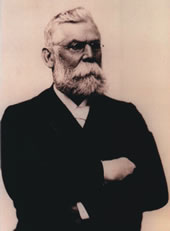
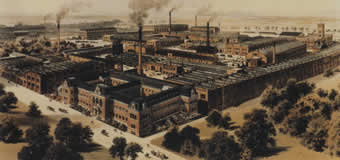
A Concise History Throughout its history, SKET Verseilmaschinenbau GmbH, Germany, has been noted for its close association with the cable and wire rope industries. In 1855, in Magdeburg, the engineer Hermann Gruson founded Maschinenfabrik und Schiffbauwerkstatt H. Gruson. This was merged into the Krupp concern in 1893. The Krupp-Gruson enterprise existed until the end of World War II in 1945, and in 1953 became known as VEB Schwermaschinenbau Ernst Thälmann.
Other important dates in the company’s history are:
After privatisation of the company at the end of 1997, the manufacture of stranding machinery was continued in Magdeburg. Today, SKET Verseilmaschinenbau GmbH is counted amongst the major machinery supply partners to the electric cable and steel wire rope industries in more than 35 countries on every continent.
SKET today The growing success of SKET derives from a variety of factors. Among these are: the experience of SKET engineers, technicians, and other employees, over many years; prompt and flexible response to customer requirements; a comprehensive production planning and quality system; and delivery reliability with short lead times. The company’s new premises, inaugurated in 1999, boasts manufacturing and assembly areas of over 8,000m2, in a site of 40,000m2. Excellent conditions are maintained for the creation and testing of innovative machines, equipment, and technologies for the manufacture of products ranging from the smallest-diameter strands to the largest cables and ropes.
SKET has become a leading specialist in the development and manufacture of the most modern machinery and equipment, and offers its customers process solutions based on many years of practical experience.
Well-trained SKET technical personnel enable the company to offer development, project engineering, and design expertise; to build the renowned SKET line of machinery and equipment; and also to provide intensive operator training and on-site services afterwards. Networked CAD/CAM work stations, with processes conducted throughout by a computer-controlled production, planning, and control system, are standard through the company. SKET has its own electrical, electronics, and software specialists and builds its own control gear. SKET products are known for quality and high-performance, and distinguished by their state-of-the-art drive and control technology. The company’s many new developments have led to a range of patented solutions and important cost economies for users of its machinery. This article will review the introduction of double-twist stranding technology into the steel wire rope industry, and examine in particular the central unit for stranding copper and aluminium wires. Survey of the SKET portfolio Machinery and equipment manufactured by SKET are subjected to rigorous trials and acceptance testing before being dispatched to the customer. Installation and commissioning times are thereby reduced. The company’s programme for cable and steel wire rope production divides up into the following main ranges:
Machinery and equipment for cable manufacture As a supplier to the cable industry, SKET Verseilmaschinenbau GmbH offers a wide range of machinery and equipment to suit particular requirements. The following text necessarily deals in detail only with a few machines. Attention is drawn especially to high-speed tubular stranding machines, with and without bull-heads; bow-type stranding machines; single-twist bunching machines for the manufacture of LAN cable and control cables; machines for the manufacture of geophysical load-bearing cables; and a wide range of other special machines. For the manufacture of energy cables, both conventional rigid stranders and high-output central stranders are available for production of the stranded conductors. Rigid stranders
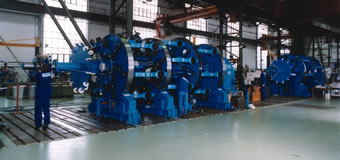
In the mid-1980s, SKET developed the MKZ central strander system. The second generation of this system was introduced in the mid-1990s. Since then, more than a dozen machines of this type in various configurations have been supplied to customers. SKET is in fact the only manufacturer of cable machinery able to supply an industrially tried and tested machine of this type. The central stranding system differs from conventional rigid stranders in that the stranding bobbins are arranged axially on the rotor axis. As a result, the bobbins are not subject to the effect of centrifugal forces, as is the case with an eccentric arrangement. Stranding speeds of 500rpm can be achieved without difficulty, irrespective of the number of bobbins in the carriage and the stranding material (copper/aluminium). Central stranders With the MKZT, each wire is provided with a stranding bobbin and a winding bobbin. When, during operation of the unit, the stranding bobbin has been emptied, action is halted and the flyer arm which has taken the wire off the stranding bobbin switched over to work in conjunction with the bobbin on its other side. This has been wound with wire from outside as an independent operation whilst the machine has been stranding. The winding bobbin thus becomes the stranding bobbin, and the emptied stranding bobbin can be refilled with wire from outside the machine. The choice between the single and twin versions is essentially a matter of the customer’s needs and space considerations. Both versions make possible a 1.5 to 2.5 times increase in output as compared with conventional rigid stranding machines. Central stranders can be supplied with all the ancillary assemblies associated with traditional rigid stranders. The machine system is capable of producing 6, 12, 18, 24, and up to 30 wire layer strand in equal- or cross-lay. Tandem operation with equipment for the screening of cable is possible. In addition to high efficiency, the unit offers these advantages:
With no bobbins to be changed, the unit can accommodate large stationary spools or containers for supplying wire to the winder bobbins. There will be practically no machine out-of-balance as with rigid stranders. Investment costs are reduced accordingly. Controlled separate drives throughout (DC or AC) ensure high production flexibility. This principle of stranding can be expected to have an increasing influence on quality-based conductor production and, after many years of industrial service, further developments in this high-output machine system are underway Drum-twisters Although in use over many decades, this technology has undergone continuous development, especially recently. Replacement of all drives with separate AC drives for all machine assemblies ensures rapid adjustment to the specific application. Automatic loading reduces downtimes when changing drums, which are “parked” in the loading system whilst the machine is running. For the stranding of pre-spiralled sector conductors, analogue layer monitoring systems are used. Depending on the product and the arrangement of the rotating pay-offs, these permit individual adjustments to be made to the AC rotational drives and, correspondingly, to the backtwist. High-production speeds for cable of ensured quality can thus be guaranteed. Drums having a flange diameter of up to 4m and a capacity of up to 30 tonnes are acceptable for the production of energy cable. Frequently a number of technological processes are combined in a single machine, e.g. stranding, screening, taping, and armouring. Drum-twisters may be complemented by other important assemblies, in particular for up-to-date tape wrapping. Tension controlled band brakes ensure high linear speeds. SKET Verseilmaschinenbau GmbH has taken this “old” machine system and optimised it for today’s cable manufacturing requirements. Planetary stranders for Optical Ground Wire (OPGW) The early 1990s saw the increasing use of loose steel tubes stranded in a single layer (usually the first) together with the armouring wires. With rapidly climbing fibre counts, multiple stranded stainless steel tubes came into use. Now, cable constructions with a centrally located tube are also used. Keenly aware of the ever-higher quality demands placed on OPGW and submarine cables, SKET, in close collaboration with the user industry, developed a range of special machinery and equipment designed to meet the need for high-productivity stranding without attenuation impairment of the optical fibre. In addition to the tried and tested planetary stranders (types MKRD and MKVD), which are suitable for all OPGW cable constructions, high-speed tubular stranders (type SRWL) were developed by SKET for specific applications. Both machine systems are fitted with a bobbin drive and brake system which guarantees the constant pay-off tension in the range 10N - 500N necessary for quality stranding. All machine assemblies are equipped with separately controlled AC drives. Further significant features of machines for the manufacture of OPGW cables are:
Machinery and equipment for the manufacture of steel wire rope As with cable-making machinery, this product range is large and comprehensive. It covers machines for the stranding of steel wire and related products, such as umbilicals, automotive products, flexible shafts, and steel cord. These SKET machine systems are of particular interest:
These SKET machine systems permit all strand and rope diameters and every known strand and rope construction to be produced. Because of their commanding position in the marketplace, SKET tubular stranding machines and double-twist bunching machines deserve emphasis. In collaboration with its rope maker customers, the company has successfully sought new and innovative means of making stranders significantly more flexible even as they meet and satisfy increasingly more rigorous requirements as to product quality, operator friendliness, and automatic monitoring. Tubular stranding machines With the wire rope industry constantly under the pressures associated with costs and competition, SKET Verseilmaschinenbau GmbH is committed to supporting the traditional wire rope maker in his search for special stranding machines with a very wide and flexible production range. Examples of such machines include:
Similar development work has been carried out with planetary stranding machines. Planetary stranders Over the last year, a high-speed, non-underroller style closing machine was supplied for the manufacture of non-rotating ropes. This is fitted with tension control for each of the strands to be closed. The machine has infinitely variable backtwist and is supplied with integral rope lubrication and calibration. Double-twist machine system For virtually all applications SKET has developed the type MSDN Out-In double-twist bunching machine (wire supply spools outside the rotor, haul-off/take-up in the rotor), and the type MSDC In-Out double-twist bunching machine (wire supply spools inside the rotor, take-off/take-up outside the rotor). Particular attention has been given to optimum wire and strand guidance, with stress on the material to be stranded maintained within its own permissible limits for the stranding of high-tensile steel wire into strand of excellent quality. Constant back-tension in the pay-off wires and a free-form (flying) strand path between the rotors are prerequisites for the maintenance of balanced forces in all double-twist bunchers. Production speeds of up to 100m/min are possible with double-twist bunching machines so long as the following conditions are met:
To this end an extremely stable and constant wire back-tension control system is required, consisting of a pulley block-based dancer and a brake chain with Teflon inserts which have extremely “soft” braking characteristics. Further features of SKET double-twist bunching machines are a rotor design without a bow; very robust design of the rotor and the cradle containing the haul-off and the take-up; long post-forming and calibration paths which can be complemented by over-twisters; torsion limiting rolls immediately in front of the stranding point to avoid possible breaks due to torsion; and high operator friendliness with good visual overview to reduce downtimes. The following examples of applications associated with recent developments demonstrate that double-twist bunching machines are very flexible in their application and not restricted to run-of-the-mill strand production. Together with a well-known wire rope manufacturer, SKET has developed a system to compact multi-layer steel wire strand in-line at 90m/min. A machine with a compacting head was exhibited at wire Düsseldorf 2002. A double-twist machine suitable for the closing of steel wire rope is equipped with rotating strand pay-offs. With this machine it is possible to install a second double-capstan haul-off to provide infinitely variable stretch to the rope in addition to the normal haul-off. In-Out double-twist bunching machines enable a number of machines to be run in tandem for the in-line production of multi-layer spiral strand and flexible shafts. Machines for the manufacture of steel cord In the field of strand and cord manufacture for the tyre and high-pressure hose industries, developments have raced ahead, both as to the product and in related stranding systems. In the Asian market in particular, complete new production facilities have been set up with capacities up to 15,000 tonnes per annum, and existing production capacities have been increased. As an experienced manufacturer of stranding machines for the steel cord industry, SKET has responded to the demand with reliable, effective, and competitively-priced machine systems. The supply programme in this product area includes two double-twist bunching machine systems, which work on the In-Out and the Out-In stranding principles. These systems are suitable both for long run wire supply bobbins with a capacity up to 72kg and for smaller bobbins for up to 20kg. The company’s testing facilities in Magdeburg, with a variety of different steel cord stranding machines, gives the customer the option of producing test strand with his own material. Co-operation with well-known steel cord manufacturers makes possible not only an exchange of know-how but also the training of personnel. Co-operation with major suppliers of wire drawing machinery and brass coating and patenting equipment enables SKET to quote on entire and highly complex systems solutions. A highlight of SKET’s machine development programme for the steel cord industry is the double-twist bunching machine system for the production of 3+9+15 construction steel cord. Instead of an expensive rotating wire pay-off for the production of this multi-layer strand, the company has developed a special pre-form head for the forming up of the 15 wire outer layer. This patented machine system has already proved its productivity and reliability to a number of steel cord producers. The experience gained is furnishing the basis for further development of a double-twist bunching machine for the stranding of compact and open cord constructions. Also of significance are highly effective and extremely compact In-Out double-twist bunching machines, designed as twin-machines, which were developed particularly for 2xd, 3xd, 2+2xd, and 3+2xd constructions. Conclusion SKET Verseilmaschinenbau GmbH will be showing its products at Wire Düsseldorf 2004, the world’s most important trade fair for the electric cable and wire rope industries. The company will be offering users the most up-to-date technical solutions to their problems. At the centre of the company’s display (Stand 11G44) will be a double-twist bunching machine for steel cord, a working exhibit.
|
||||||||||||
|
||||||||||||